There is a short flight of stone steps on the Port Louis waterfront that most visitors drive straight past on the motorway. UNESCO counts them: 14 steps, “upon which all immigrants had to lay foot before entering the immigration depot”. Between 1849 and 1910, nearly half a million people climbed them, according to the Aapravasi Ghat Trust Fund, the body that runs the site today. The trust puts the share of modern Mauritians descended from indentured labourers at about 70 per cent.
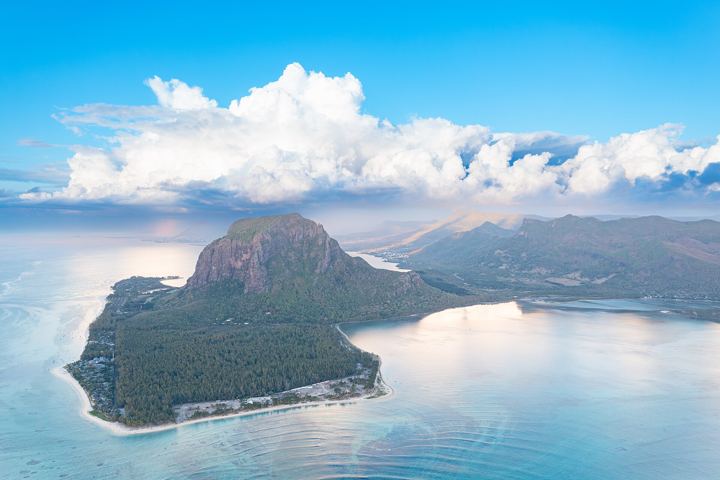
On the south-west tip of the island, stands the mountain every holiday photo of Mauritius seems to include. Le Morne Brabant is the island’s second World Heritage Site, and its story runs the other way: not people arriving under contract, but people escaping slavery and hiding on cliffs where nobody could follow.
Most beach holidays here never touch either. You can see both in a single day, and it changes how the rest of the island looks.
Why a dock in Port Louis matters to half the world
Britain abolished slavery across its empire in 1834, and Mauritius ended it in 1835. The sugar estates still wanted workers. The British answer was what it called “the great experiment”: recruiting “free” labourers on contracts, usually for five years. Mauritius was the first place it was tried, and UNESCO says its success led other colonial powers to copy it from the 1840s, sending more than two million indentured labourers to the Caribbean, Fiji, southern Africa and beyond.
The trust’s factsheet gives more than 462,000 arrivals in Mauritius, 97.5 per cent of them from India, the rest from China, the Comoros, Madagascar, Mozambique and South-East Asia. Two thirds stayed for good. Others were shipped on from here to Réunion, which is worth knowing before you take our Réunion road trip.
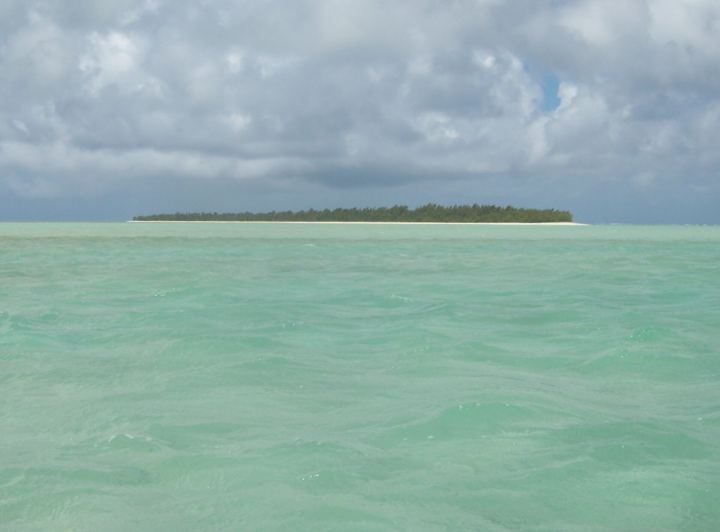
The depot itself opened in 1849 on the bay of Trou Fanfaron. Its brief history reads like an intake manual. A doctor met every ship and vaccinated anyone without a smallpox jab. If he found a contagious case, the whole ship went into quarantine on an islet. The healthy sat in the yard to be counted, and their complaints were written down. From 1865 a photographer took two portraits of every immigrant: one for their ticket, one for the files. Most people stayed about two days before planters or sirdars came to collect them.
What you actually see
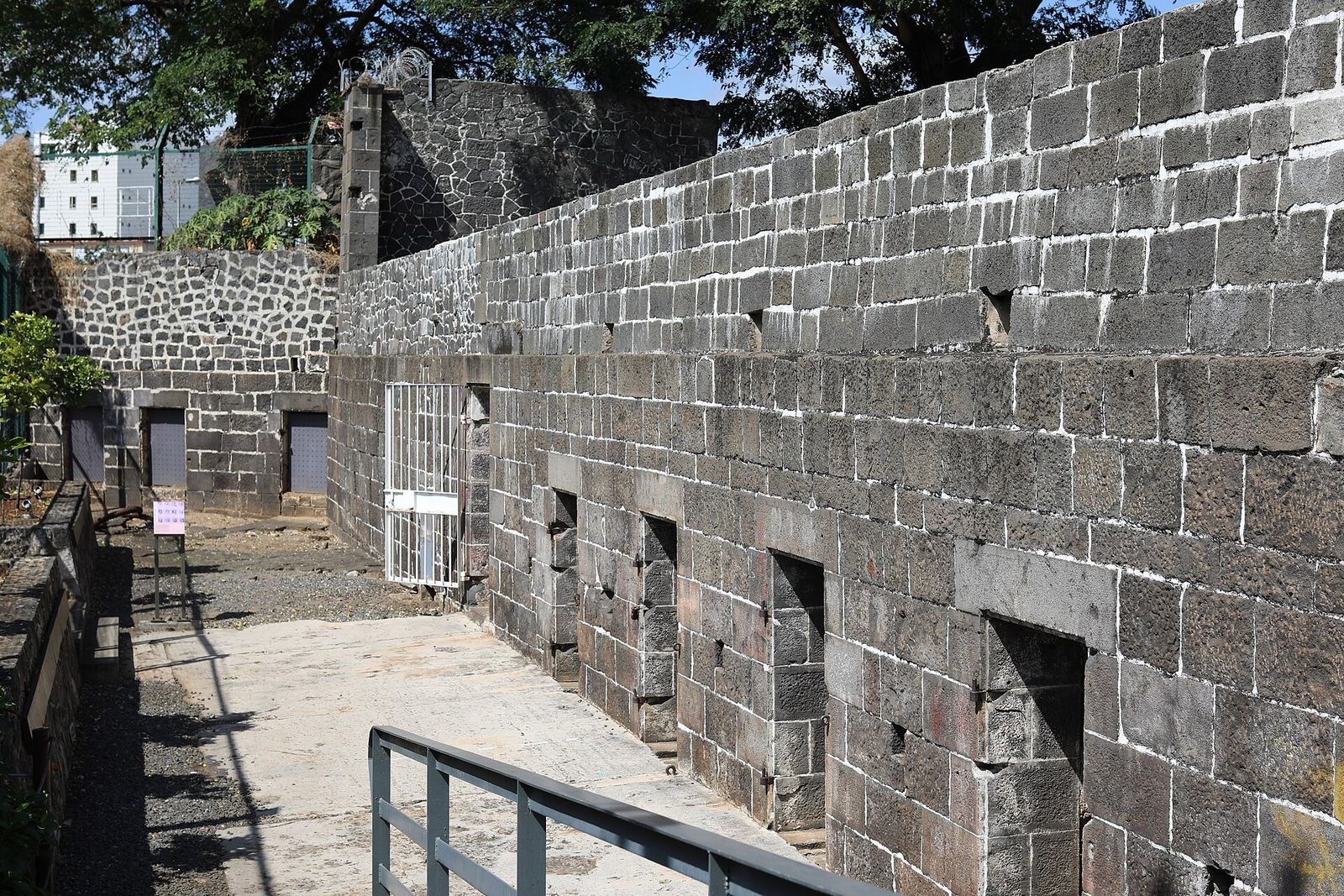
Be ready for something small. The whole property covers 1,640 square metres, and UNESCO says less than half of the 1865 depot survives. A railway was cut through the middle in 1864, Cyclone Carol damaged it badly in 1960, and much of it was destroyed in the 1980s when the motorway went in. What remains is the important part: the basalt walls of the immigrant sheds, kitchens, lavatories, a hospital block and those steps.
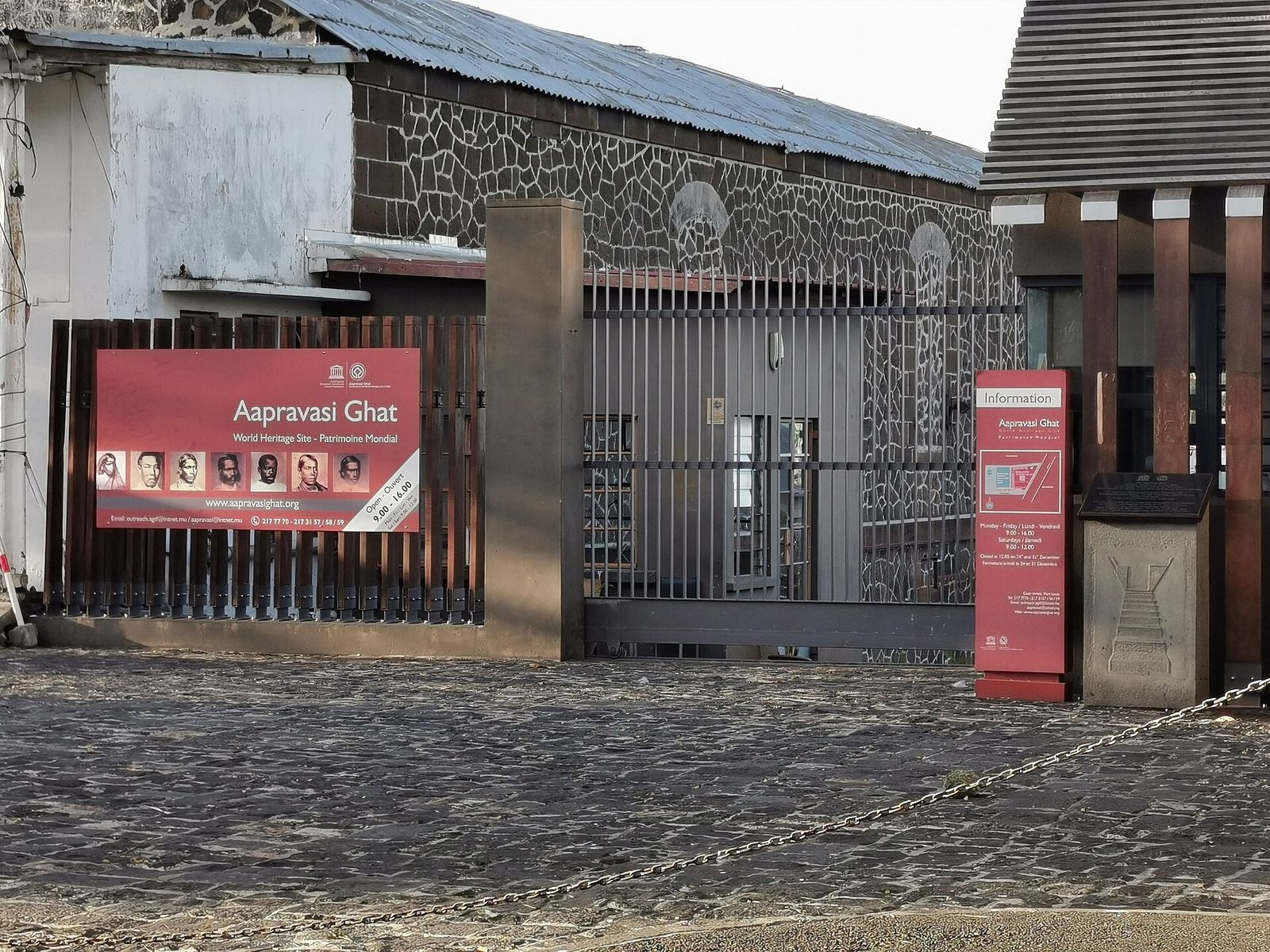
The name tells its own story. Until 1987 the place was known as “Coolie Ghat”. That year it became a national monument and was renamed Aapravasi Ghat, Hindi for the landing place of immigrants. Since 2001, 2 November, the date chosen to mark the first labourers’ arrival on the ship Atlas, has been a public holiday. UNESCO added the site to the World Heritage List on 16 July 2006.
The visit starts at the Beekrumsing Ramlallah Interpretation Centre, then moves out to the site. The trust’s factsheet allows about 45 minutes for the centre and 20 for the depot, so an hour in all, and says both are fully wheelchair accessible, including the toilets. It lists opening hours of 9.00 to 16.00 on weekdays and 9.00 to 12.00 on Saturday. That sheet dates from 2020, so check before you go, especially on a public holiday.
The practical bit: get there early, park elsewhere
There is no parking at the depot. The factsheet sends drivers to the Granary or the Caudan Waterfront, both a short walk away. The trust’s map also shows the Port Louis bus station close by, so this is one sight you can reach without a car.
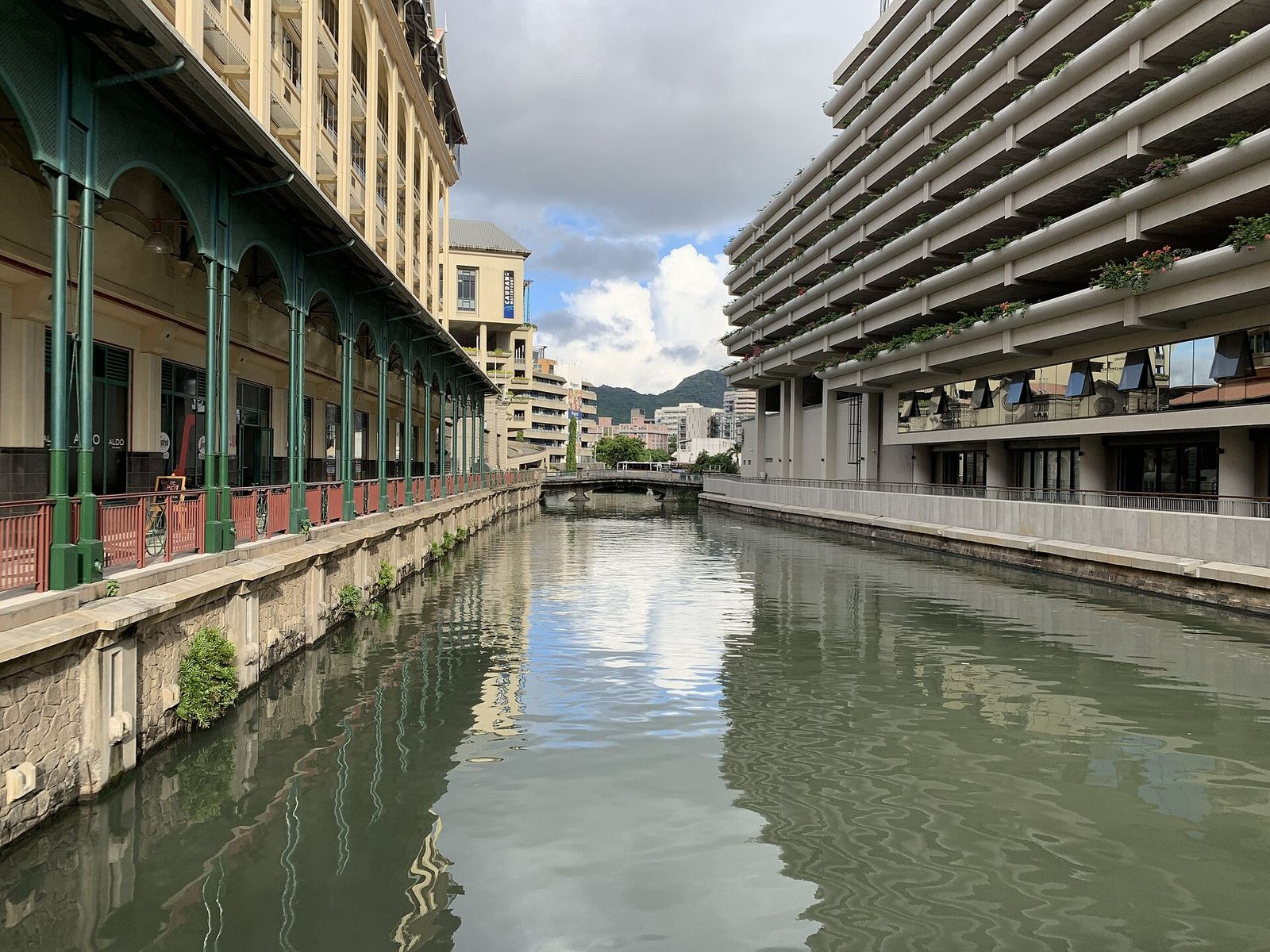
Go first thing. Port Louis is hot and busy by late morning, and you want the afternoon for the drive south. If your family came from India and you hope to trace an ancestor, note that the immigration records are no longer at the depot. They moved to the Mahatma Gandhi Institute in 1976, after the cyclone damage.
Le Morne: the mountain that hid a republic
Le Morne went on the World Heritage List in July 2008. UNESCO’s citation explains why: through the 18th and early 19th centuries, runaway slaves, known as maroons, built small settlements in the caves and on the summit, protected by cliffs that were wooded and close to inaccessible. So many lived there that Mauritius was nicknamed the “Maroon republic”. The oral traditions of those escapes are why Mauritian Creoles treat the mountain as a symbol of resistance rather than scenery.
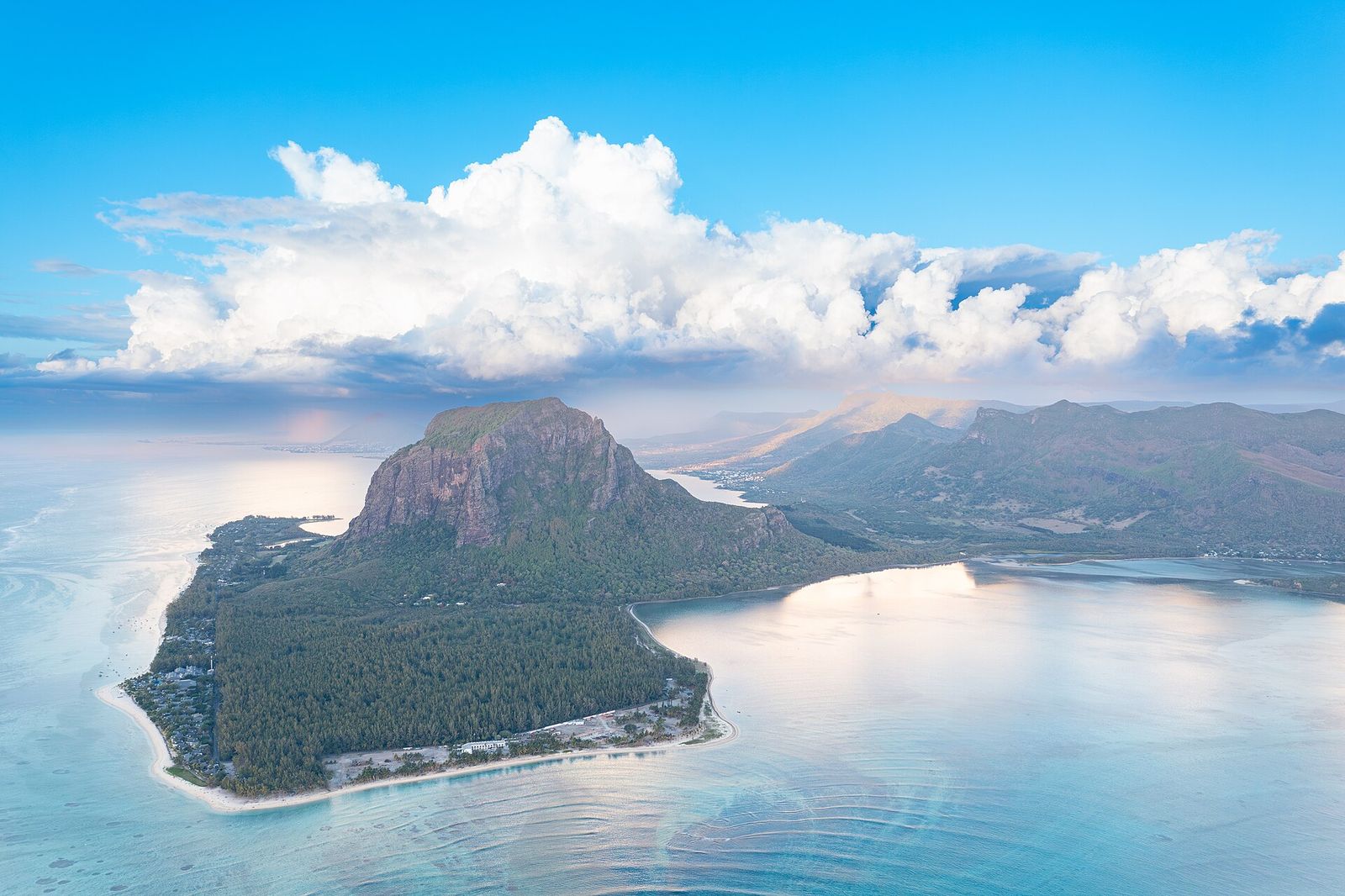
Start at the International Slave Route Monument, near Le Morne public beach. It is a central monument surrounded by nine smaller stone sculptures standing for the places enslaved people were taken from or sent to, as Google Arts & Culture’s record from the site’s trust describes it. Read the plaques, then look up at the cliffs. It lands.
The second stop, the Trou Chenille Open Air Museum on the lower slopes, is in flux. In August 2026 the government presented a Rs 124 million plan to rebuild its access and visitor facilities, L’Express reported, with works due to start once UNESCO signs off. Officials said the museum would stay open during the works, but check locally before you count on it.
If you want to climb, the guided hike up Le Morne Brabant is steep near the top and best done early in the cooler months. Our guide to the best time to visit Mauritius sets out the seasons coast by coast.
How to do both in one day
Leave the coast early and be at the depot when it opens at nine. Give it an hour and a half with the interpretation centre, then a coffee at the Caudan. Drive south-west after lunch and reach the Slave Route Monument by mid-afternoon, when the light on the cliffs starts to turn. Finish on Le Morne public beach for sunset, which is not a bad place to think about everything you have just seen.
Two small tips. Dress for a working city in the morning and the beach in the afternoon, and carry water. And if this kind of history pulls you in, Rodrigues and the Comoros, which sent labourers to this same dock, tell the rest of the region’s story from smaller islands.
Where to stay in Mauritius: hotel ideas
A short list of well-known places to stay, from budget to luxury, picked for location and style. We have not been paid to include them. Prices and availability change often, so compare rates and read recent reviews before you book.
- Budget
Coin de Mire Attitude
Cap Malheureux / Bain Boeuf, north coast
A family-friendly three-star hotel between Cap Malheureux and Grand Baie, across the coast road from Bain Boeuf beach and facing Coin de Mire island.
Official website → - Mid-range
Veranda Grand Baie
Grand Baie, north coast
A four-star, all-inclusive hotel in Grand Baie, handy for the north's restaurants, boat trips and sheltered beaches.
Official website → - Luxury
LUX* Le Morne
Le Morne, south-west coast
A five-star beach resort at the foot of Le Morne Brabant on the west coast, known for its sunsets and close to the kitesurfing lagoon.
Official website → - Luxury
One&Only Le Saint Géran
Pointe de Flacq / Belle Mare, east coast
A landmark luxury resort on a private peninsula between the lagoon and the open ocean on the east coast.
Official website →
Timetables, park fees and entry rules change, sometimes at short notice. Check the official links in this guide before you book anything.